Acupuncture Schools Worth Knowing About
Acupuncture education in the United States is no longer a single path with a single destination. Forty years ago, there were a handful of programs training practitioners in a discipline that most of mainstream medicine had barely acknowledged. Today there are dozens of accredited institutions offering master’s and doctoral level training, and the field itself has grown complex enough that where you study and how a program is structured shapes not just your credentials but the entire orientation of your practice.
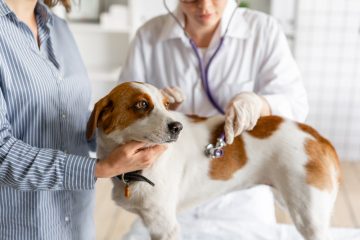
The schools worth knowing about are not all trying to do the same thing, which is exactly what makes this list worth reading. Some are building interdisciplinary healthcare professionals who can work alongside physicians in hospital settings. Others are preserving classical lineages that go back centuries. Some are designed for the student who wants to understand the science behind every needle placement, and others are built for the practitioner who wants to go deeper into tradition than most Western institutions allow. One operates in a category entirely its own, serving the veterinary professionals who want to bring these modalities to animal care in a way that holds up to scientific scrutiny.
Here is a look at the programs doing this work with intention and rigor.
For the Student Seeking the Broadest Foundation
- Pacific College of Health and Science
Pacific College of Health and Science has been training acupuncture practitioners since 1986 and has grown into the largest acupuncture school in the United States, with campuses in San Diego, New York and Chicago. According to the National Institutes of Health, more than 10 million acupuncture treatments are administered annually in the United States alone, and Pacific College has been producing the practitioners behind a significant portion of that care for nearly four decades.
The program prepares students through an intersection of Eastern healthcare practices and Western bioscience, with a strong hands-on clinical component at student clinics on all three campuses where learning practitioners serve real clients. Both master’s and doctoral pathways are available, and working professionals can access an online transitional doctorate designed for licensed acupuncturists who want to advance their credentials without pausing their practice. That transitional doctorate program has produced the largest network of acupuncture doctorate graduates in the nation.
For students who want a nationally recognized institution with deep resources, multiple campus options and a curriculum that bridges traditional medicine and modern bioscience, Pacific College is the natural starting point.
- Maryland University of Integrative Health
Maryland University of Integrative Health holds a distinction no other institution can claim. MUIH’s Master of Acupuncture was the first accredited master’s degree program in acupuncture in the United States, which means the school didn’t just enter the field, it helped define what accredited acupuncture education looks like in this country. Under its former name Traditional Acupuncture Institute, MUIH was the first acupuncture school accredited by the National Accreditation Commission for Schools and Colleges of Acupuncture and Oriental Medicine in 1985.
The programs today span master’s and doctoral degrees in acupuncture and herbal medicine, built around preparing practitioners to work alongside physicians and other healthcare professionals in integrative settings. Beyond acupuncture, MUIH also offers programs in nutrition, herbal medicine, yoga therapy and health coaching, which means students are surrounded by a community that takes the full spectrum of integrative health seriously rather than treating acupuncture as a standalone discipline. The school’s Community Health Initiative further embeds that commitment by bringing student practitioners to outreach clinics using auricular acupuncture to address anxiety, stress and pain in populations with limited healthcare access.
For students who see acupuncture as one part of a broader integrative practice and want a program that has been thinking in those terms since before most other institutions existed, MUIH is one of the most substantive options in the country.
For the Student Drawn to Traditional Chinese Medicine
- Five Branches University
Since 1984, Five Branches University Graduate School of Traditional Chinese Medicine has been a respected pioneer in bringing Traditional Chinese Medicine to the forefront of the medical field, with nationally ranked and accredited master’s and doctoral degree programs at two California campuses in Santa Cruz and San Jose. Courses are offered in both English and Chinese, which says something meaningful about the program’s depth of commitment to the source material. The distinguished faculty, many with over 30 years of academic and clinical experience, play a significant role in shaping the curriculum and in establishing the school’s reputation as a leader in TCM education. The postgraduate DAOM program brings in TCM experts for advanced instruction in a hybrid format built for working practitioners, and students consistently point to the quality of clinical training and the depth of the herbal medicine curriculum as the defining strengths of their time there.
- Daoist Traditions College of Chinese Medical Arts
There is a particular kind of student for whom the modernized, biomedically integrated approach to acupuncture education feels incomplete, and that student tends to find their way to Asheville, North Carolina. Daoist Traditions College of Chinese Medical Arts is one of the nation’s premier colleges of Classical Chinese Medicine, and the distinction between classical and traditional Chinese medicine matters more than it might seem from outside the field. Classical Chinese medicine works from the original foundational texts rather than the standardized TCM formalized in 20th-century China, and practitioners trained in it often describe a meaningfully different relationship to diagnosis and treatment.
The four-year MAHM program offers immersive, in-person training in both Classical and Traditional Chinese Medicine, including acupuncture, herbal medicine and hands-on skills like cupping, tui na and moxibustion. The college also offers a dual-degree track for qualified students to earn both the Master and Doctor of Acupuncture and Herbal Medicine within a single program, and a postgraduate certificate in herbal medicine for licensed practitioners ready to specialize further.
The cohort model creates something larger institutions struggle to replicate: a real sense of shared momentum among students moving through a demanding curriculum together. For students who want a classical foundation, an intimate learning environment and a program situated in one of the more culturally interesting cities in the American South, Daoist Traditions is worth serious consideration.
For the Student Who Values Lineage
- Yo San University
Few institutions can make a claim as specific as Yo San University’s. The teachings and values cultivated over 38 generations of its founders’ legacy permeate the university’s programs and clinical training. That is not a marketing phrase. It is a description of a school whose entire educational philosophy is organized around the idea that this medicine was passed down through people, not just textbooks, and that the transmission of that knowledge requires a particular kind of relationship between teacher and student.
Located in Los Angeles, Yo San offers master’s and doctoral programs with clinical training at the on-campus Blount Community Clinic and off-campus partnerships including Children’s Hospital Los Angeles. Small class sizes and an intimate setting rooted in Taoist tradition define the experience, and students describe their time there in terms that go well beyond technical training. The program invites that depth deliberately, treating the development of internal awareness as inseparable from the development of clinical skill. For students who want to study Chinese medicine in a setting that honors its philosophical and spiritual dimensions as core rather than supplementary, Yo San is a rare option.
For the Student Who Wants a University-Based Environment
- Northwestern Health Sciences University
Not every acupuncture student wants to study at a standalone Chinese medicine college. Northwestern Health Sciences University in Bloomington, Minnesota houses its acupuncture and Chinese medicine programs within a broader health sciences university that also trains chiropractors, massage therapists and other practitioners, creating an interprofessional environment that shapes how students think about patient care before they ever graduate.
NWHSU offers a Master of Acupuncture and a Doctor of Acupuncture with a Chinese Herbal Medicine Specialization, with the master’s completable in eight trimesters and the doctorate in ten. Hands-on skill development begins on the first day of the program, and students gain clinical experience across inpatient and outpatient settings with a variety of patient populations. Many faculty members were educated in China and hold advanced degrees from Chinese universities, which keeps the classical foundations of the medicine intact even within a more biomedically integrated setting. Financial aid is robust and the admissions team works directly with students to build accessible funding packages, which removes a barrier that stops a lot of otherwise qualified people from pursuing this path.
For the Veterinary Professional
- CuraCore Veterinary
Every program on this list trains practitioners to work with human patients. CuraCore exists for everyone else, and that distinction is not incidental. It is the entire point.
Over the past 25 years, CuraCore has built a reputation as the global leader in scientific integrative medicine for veterinary professionals. At CuraCore VET, veterinarians and veterinary students learn how to provide scientifically based techniques including medical acupuncture, medical massage, photomedicine and integrative rehabilitation. While medications and surgery have their place, integrative medical options should also be considered in animals’ treatment care plans, and decades of research have shown how these methods help animals heal and restore quality of life.
The philosophy driving the program is specific and worth understanding. CuraCore was built on the conviction that integrative medicine should function as a first-line option in veterinary care rather than something practitioners reach for after conventional approaches have been exhausted. Every course is grounded in anatomy, physiology and clinical reasoning, which means practitioners leave with not just new techniques but the scientific understanding to apply them confidently and defend their choices to colleagues and clients who may be skeptical. The curriculum is continuously updated to reflect the evolving evidence base in biomechanics, exercise science, pain physiology and regenerative medicine, which matters in a field where the research is still actively developing.
The course catalog spans medical acupuncture, integrative rehabilitation, botanical medicine, photomedicine and medical massage. Veterinary students in their third year and beyond are welcome to enroll in several programs, which means practitioners don’t have to wait until after graduation to start building these skills. Mini courses are available for practitioners who want to develop knowledge in a specific area without committing to a full certification program, and all carry continuing education credits in a convenient online format.
For veterinary professionals ready to expand what they can offer their patients in a way that holds up to scientific scrutiny, CuraCore is not just a good option on a list. It is the defining resource in its field.
Acupuncture education has matured considerably in the United States, and the programs doing it well are doing it in meaningfully different ways. The right school depends on what draws you to this medicine in the first place, how you learn best and what kind of practitioner you want to become. Whether you’re drawn to classical lineage, interdisciplinary healthcare, rigorous TCM training or the specific and compelling frontier of veterinary integrative medicine, there is a program on this list built for exactly the kind of learner you are.